




Emergency Tree Removal in Metro Atlanta
Fast, safe response when a tree comes down and you cannot wait. When a storm drops a pine across your driveway or a limb tears into your roofline at 2 a.m., you need someone who can get to you and get the tree off safely. We are PAC-TREE, and emergency tree removal across the Atlanta metro area is exactly the work our crews are built for.
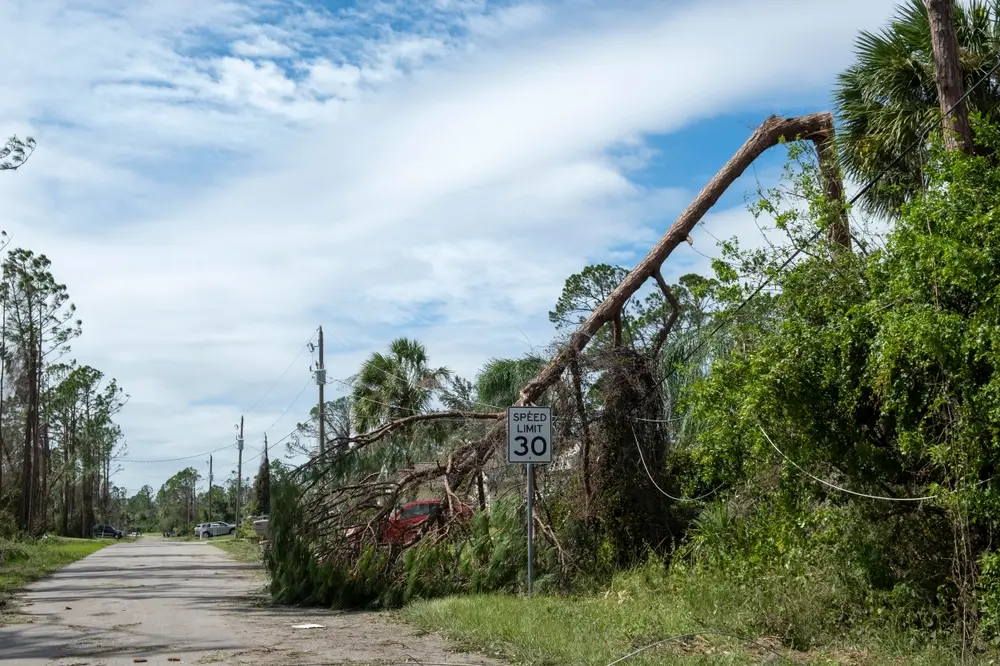
The greater Atlanta area is one of the most heavily wooded major metros in the country, and that canopy is beautiful until high wind, saturated clay, or an ice load turns a mature oak or loblolly pine into a hazard sitting on top of your house. Locally based in Grayson, GA, serving the greater Atlanta area. Send a few details and photos of the tree, and we will tell you what happens next.
Why Trees Fail Across the Atlanta Metro
Most emergency calls we run in the Atlanta metro area trace back to a handful of predictable causes, and knowing them helps you understand why a tree came down and whether the rest of your yard is at risk.
The red clay soil common across the region drains slowly, so after several days of rain the ground turns soft and root plates lose their grip, which is how healthy-looking trees topple in a summer thunderstorm. Tall, shallow-rooted loblolly and shortleaf pines catch wind like sails and snap or uproot, while older water oaks are prone to internal decay that hides until a limb the size of a car lets go.
Add the occasional winter ice storm that coats every branch in weight the tree was never designed to carry, and you have the recipe for the calls that fill our phone line every storm season.
What Emergency Tree Removal Costs
Emergency tree removal is priced by the specific job, not a flat rate, because the danger and difficulty vary enormously from one call to the next.
Read More →
What drives the number is the size and species of the tree, where it fell, and how much risk is involved in getting it down safely: a pine lying in an open yard is straightforward, while an oak resting on a roofline over a gas meter, near power lines, or in a tight side yard that no truck can reach takes rigging, more crew, and more time.
Before any cutting starts we assess the situation and give you a clear scope and a written quote, so you know what you are agreeing to rather than getting a surprise after the fact. If the removal ties into an insurance claim, we can document the damage and the work in the way adjusters expect, which often makes the difference in what gets covered.
The Causes Behind Most Emergency Calls
Storm and Wind Damage
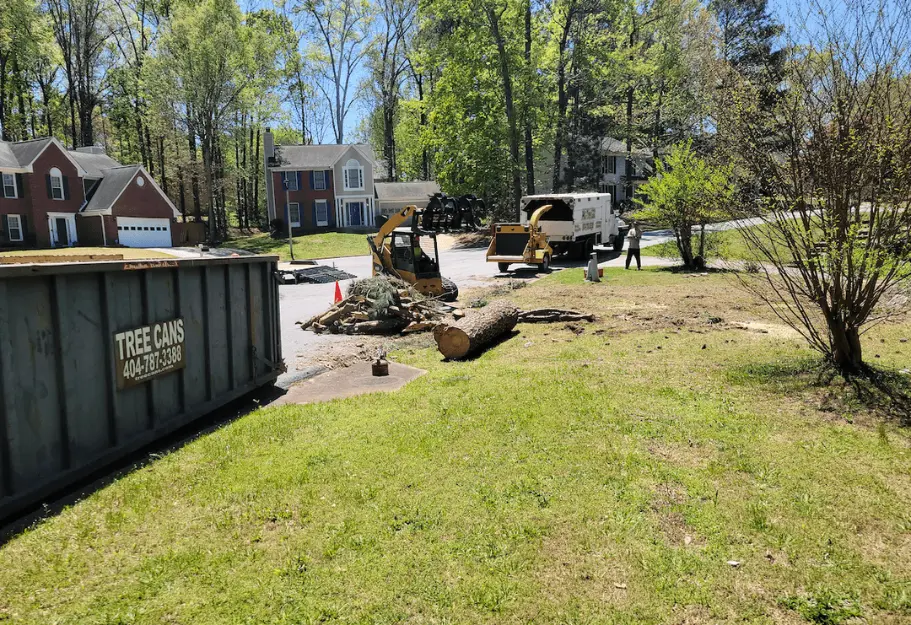
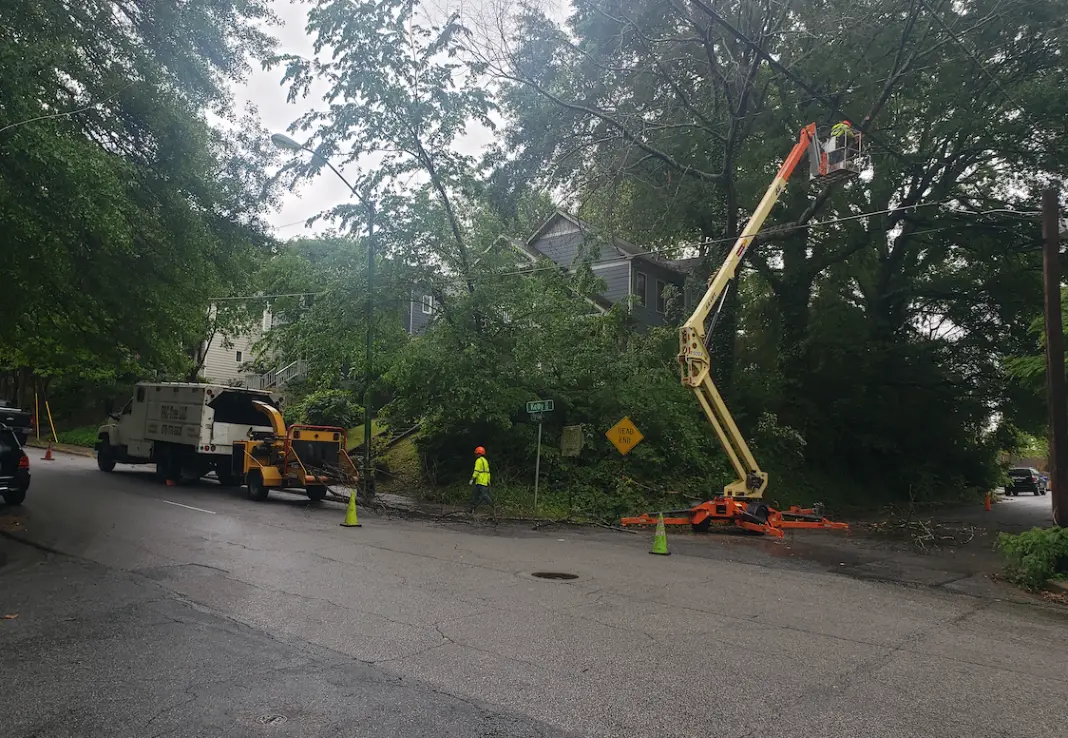
Severe thunderstorms, straight-line winds, and the remnants of tropical systems moving up from the Gulf are the leading reason we get called out here. A single microburst can drop multiple trees on one street, and when that happens we prioritize anything resting on a structure, a vehicle, or a power drop.
Read More →
We work through the queue by danger level, not just by who called first, because a tree pinning a roof cannot wait behind a limb lying harmlessly in a backyard.
Saturated Ground and Root Failure
The heavy, slow-draining clay under most of the region holds water long after the rain stops, and that is when we see full uprootings from trees that looked perfectly stable a week earlier.
Read More →
If you notice fresh soil heaving or cracking at the base of a large tree, or the trunk starting to lean where it never did before, treat it as urgent. That is often the last warning before the whole root plate lifts.
Decay and Hidden Weakness
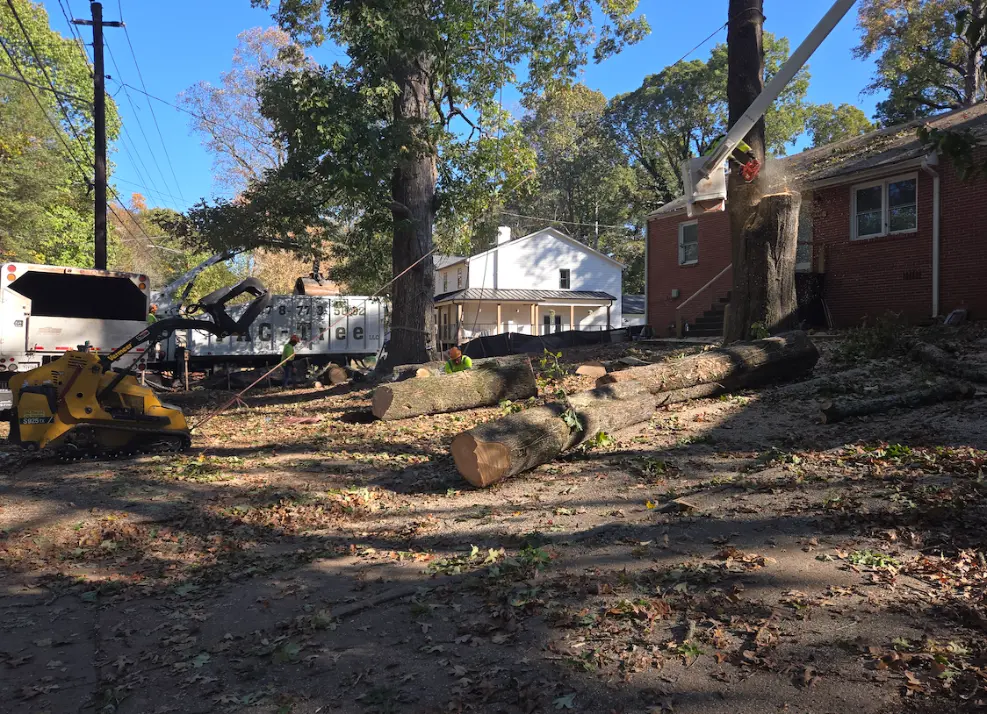
Many of the mature hardwoods shading older neighborhoods across greater Atlanta carry internal rot you cannot see from the ground. Fungal conks at the base, hollow-sounding trunks, and large deadwood high in the crown are the signs we look for, and any of them can turn a routine storm into a failure.
Read More →
When we remove a tree in an emergency, we also tell you honestly whether the ones still standing nearby need attention before the next system rolls through.
When to Call for Emergency Tree Service
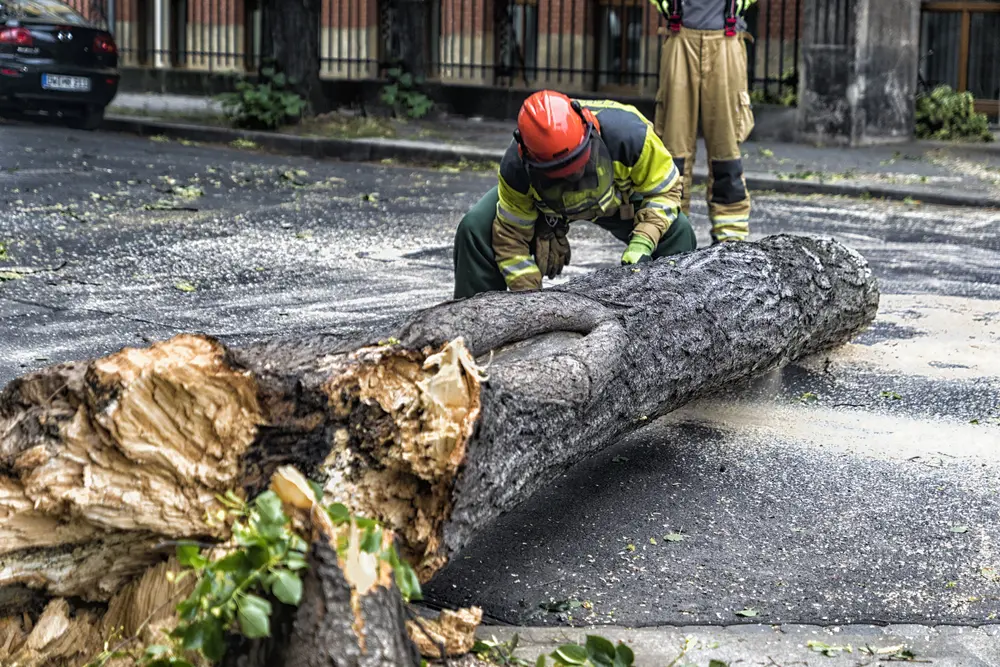
Not every damaged tree is an emergency, but some situations put people, structures, vehicles, or access at immediate risk and should not wait. Call us right away when you are dealing with any of these:
- Fallen or partially fallen trees
- Unstable or leaning trees, especially with soil lifting at the base
- Hanging, cracked, or broken limbs still up in the canopy
- Storm-damaged trees
- Trees blocking a driveway or other access
- Trees resting on or threatening a home or vehicle
- Trees affecting a business or commercial property
- Large branches hanging over a structure
- Debris creating access or safety concerns
If you are not sure how urgent your situation is, call and describe what you are seeing, and we will help you gauge it. A few photos of the tree and where it fell make that conversation much faster and more accurate.
Discuss Your Tree Concern
Serving the Whole Metro from Grayson
We run out of Grayson in Gwinnett County, and that central-east position gives us practical reach across the region along I-85, I-285, and the connecting corridors that tie the metro together.
Read More →
Because we know how traffic and storm damage stack up on those routes, we can route crews efficiently instead of guessing. That matters most in the hours right after a storm, when every minute a tree sits on your roof is a minute water is getting inside.
Controlled Removal and Rigging
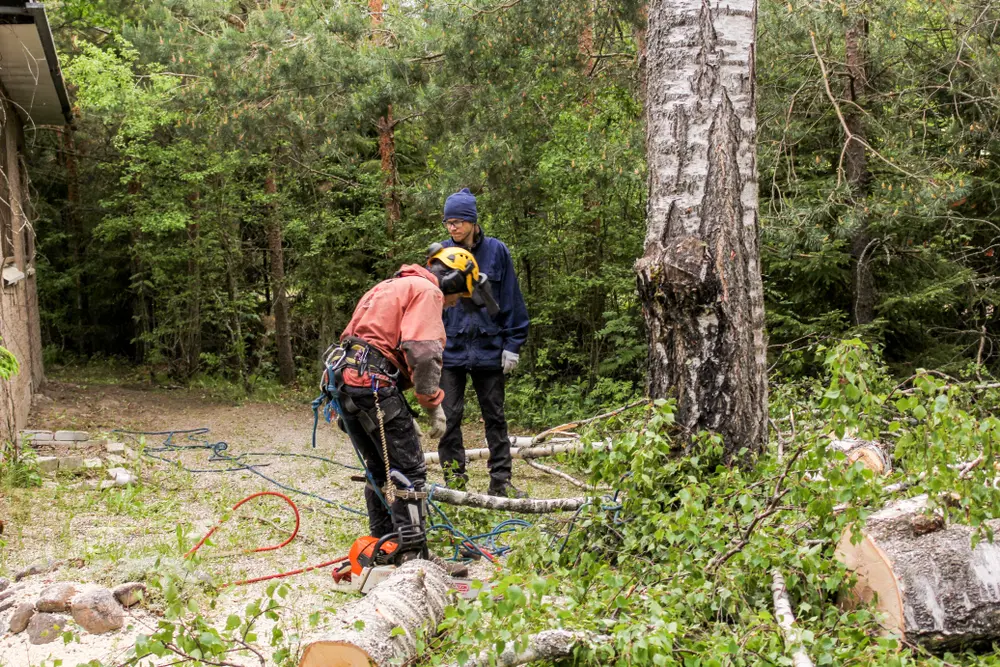
Getting a tree off a house is the opposite of felling one in open woods, and it demands rigging so nothing drops where it should not.
Read More →
We use ropes, and cranes when a job calls for it, to lower heavy sections in controlled pieces rather than letting gravity finish the damage. This is slower and more deliberate on purpose, since the goal is to protect what is left standing, not just to remove the tree.
Frequently Asked Questions
Response time depends on how many calls are coming in at once, and after a major storm the whole metro is calling at the same time. We triage by danger, so a tree on a house, a car, or a power drop moves to the front of the line ahead of lower-risk debris, and we will give you an honest window when you call rather than a promise we cannot keep.
Call us first if the tree is an active hazard, because stopping further damage is the priority and most policies expect you to prevent additional loss. Document everything with photos before and during the work, and we can provide the itemized records adjusters look for so your claim goes as smoothly as possible.
A tree that has suddenly started leaning, especially with soil cracking or lifting at its base, is a genuine emergency and should be treated as one. That kind of lean usually means the root plate is already failing, and the safest move is to keep people and vehicles away from the fall zone and call right away rather than waiting to see if it settles.
If a tree is on or near a live power line, we coordinate carefully and will not put a crew or your property at risk by cutting into an energized line. The utility must de-energize or clear the line first in many cases, and we will tell you honestly when that call needs to happen before we can safely proceed.
We cut the trunk into sections and clear the debris so your property is safe and passable, and from there the wood can be hauled away, chipped, or left for firewood depending on what you want. If you need the stump ground out or the site cleaned up further, we handle that too and will lay out the options before we finish.
When the Next Storm Rolls Through, You Know Who to Call
When the next storm rolls through the greater Atlanta area, you should not have to figure out who to call while a tree sits on your roof. Save our number now, and if the worst happens, send us a few photos and a description and we will tell you exactly what happens next.
If a tree on your property needs to come down, we can help anywhere in Metro Atlanta. Call us or request a quote, and we will get someone out to look at the tree and give you a straight answer.